
The Copa America thrives on unpredictability and raw emotion, from Brazil's 2019 triumph to Argentin
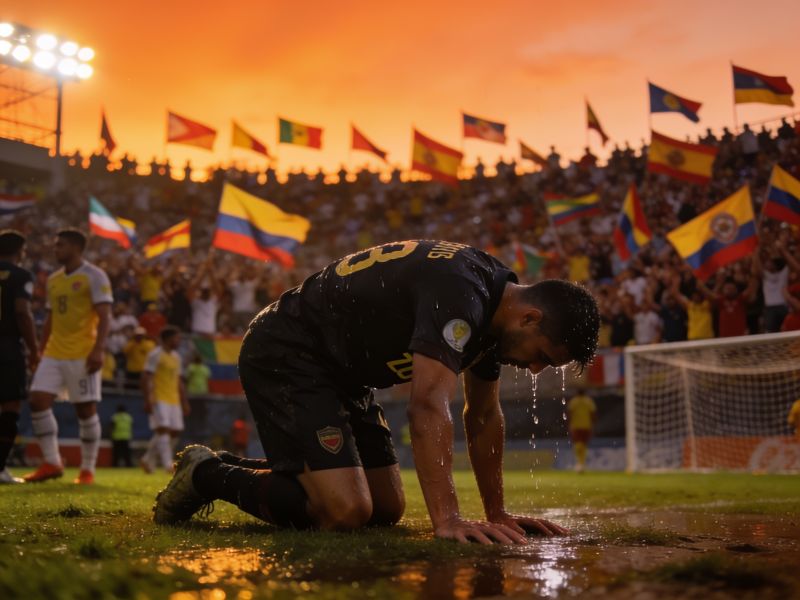
he 2019 Copa America final at the Maracanã ended with Peru's players collapsed on the pitch。not from exhaustion but from the weight of a 3-1 defeat to Brazil. That image—the tearful embrace of Paolo Guerrero, the reluctant applause from Peruvian fans who had traveled 2,500 miles—captures what the Copa America delivers better than any tactical breakdown. It is a tournament where the emotional register runs higher than in any European competition, and the football is often messier, more desperate, and more human for it.Consider the frequency of the unexpected. Since 2000。the Copa America has produced seven different champions—Brazil, Argentina, Uruguay, Colombia, Chile (twice), and Peru (as a finalist in 2019, though they lost). Compare that to the Euros, where Spain, France, and Portugal have dominated stretches. The Copa's format, with 12 teams (including two invited guests from CONCACAF or Asia), breeds a group stage where one bad afternoon can eliminate a giant. In 2016, Brazil failed to advance from a group containing Peru and Ecuador. That kind of volatility isn't a flaw;
it's the tournament's signature. Tactical conservatism gets punished because the margins are razor-thin and the refereeing often lets physical duels slide.The Copa America's history is also a history of host countries using the tournament as a political and cultural stage. Venezuela in 2007, Bolivia in 1997, Ecuador in 1993—each used the event to project stability and regional pride。sometimes awkwardly. When Argentina hosted in 2011, the government plastered Buenos Aires with slogans about continental unity, then watched the national team stumble out in the quarterfinals on home soil. That dissonance between official narrative and on-pitch reality is a recurring Copa motif. It's not a sanitized FIFA product;it's a tournament where the local press will interrogate a coach's tactics for three hours on live radio, and where players' families sit in the stands with no corporate separation.The 2021 edition in Brazil—relocated from Argentina and Colombia weeks before kickoff due to political unrest and COVID-19—felt like a test of the tournament's stubborn adaptability. Empty stadiums。a last-minute organizational scramble, and Argentina finally ending a 28-year title drought with a 1-0 win over Brazil at the Maracanã. Lionel Messi's first major international trophy came in a Copa America final that felt, oddly, less chaotic than expected. But the backdrop—Brazil's president openly criticizing the tournament before hosting it—reminded everyone that the Copa America survives on improvisation. Logistics are messy, pitches vary from pristine to patchy, and broadcast schedules sometimes shift without notice. Yet the football endures because the stakes are existential for players from smaller nations. For a Bolivian or Venezuelan squad, a Copa America upset isn't a footnote;it's the defining memory of a generation.What keeps the Copa America relevant in a crowded football calendar is its refusal to become polished. The 2024 edition in the United States will test whether that rough charm translates to a market more accustomed to NFL-style spectacle. My worry: the tournament's edge fades if organizers over-sanitize the experience. The Copa's value lies in its capacity for a Peruvian fan to cry in a stadium concourse, for a Chilean defender to commit a cynical foul in the 89th minute, for a Venezuelan goalkeeper to make a save that gets replayed in Caracas for a decade. That's not a marketing hook. It's the reason the Copa America remains the most unpredictable major international tournament on the planet—and why I'll watch every minute of it, even when the football is ugly.